
Welcome back to class, otaku scholars. Today we’re performing psychological surgery on one of anime’s most beloved and misunderstood protagonists. Prepare to have your entire understanding of depression, intimacy, and Eva Unit-01 completely reconstructed.
You know that feeling when you’ve been defending someone’s behavior for years, thinking you totally understand their deal, only to realize you’ve been completely wrong about what’s actually happening in their head?
That was me with Shinji Ikari.
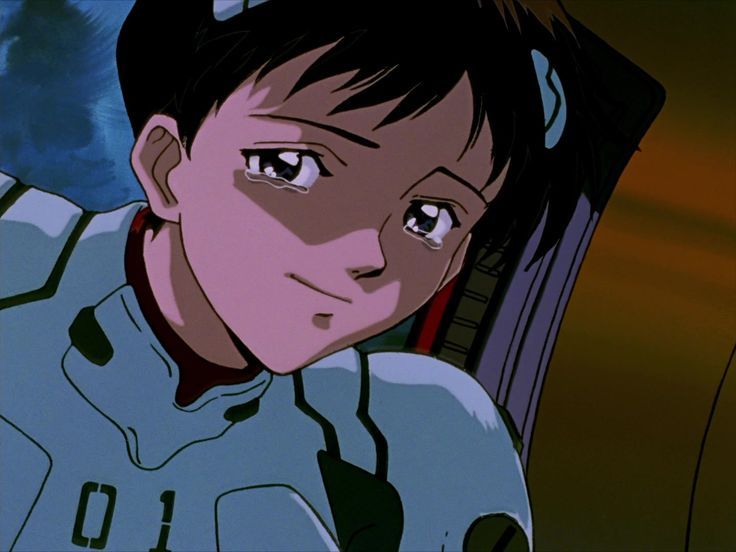
For over a decade, I was out here in forums and Discord servers explaining the Hedgehog’s Dilemma to anyone who’d listen. “It’s about the universal struggle of human connection!” I’d type furiously at 2 AM. “We all want closeness but fear getting hurt!” I had memorized Schopenhauer’s porcupine parable. I could quote Episode 4’s monologue verbatim. I thought I was so smart.
But here’s the plot twist that’ll make you want to rewatch the entire series: The Hedgehog’s Dilemma was never Shinji’s problem. It was just the symptom.
And once you see what’s really happening in his psychological architecture, you can’t unsee it. Every scene, every “I mustn’t run away,” every relationship disaster suddenly makes terrifying sense. We’ve been treating the fever while ignoring the infection for three decades.
The real diagnosis? Shinji Ikari has a textbook case of Avoidant Attachment Style, forged in the fires of childhood abandonment trauma. And understanding this doesn’t just change how we see Eva. It changes how we see ourselves.
The Misdiagnosis That Fooled a Fandom
Let’s start with what we thought we knew.
The Hedgehog’s Dilemma gets introduced in Episode 4, delivered through Ritsuko’s clinical explanation of why humans maintain distance to avoid mutual harm. It’s presented as this universal human condition, this philosophical framework that explains why connection is inherently painful.
And we ate it up.
We spent years discussing this metaphor like it was the key to understanding Shinji’s entire character. Forums dedicated thousands of posts to analyzing how the “spines” represented emotional vulnerabilities. Academic papers were written about Schopenhauer’s influence on Anno’s work. (If you want to experience this philosophical journey yourself, the complete Evangelion BluRay collection includes director’s commentary that accidentally reveals even more attachment dynamics.)
But we were looking at the wrong layer of the psychology.
The Hedgehog’s Dilemma describes what Shinji does (maintains painful distance from others), but it doesn’t explain why he does it. It’s like saying someone has a cough without diagnosing the pneumonia. The cough isn’t the disease. It’s just how the disease presents.
The real breakthrough came when I stopped focusing on the philosophical metaphor and started tracking the actual behavioral patterns. When I mapped Shinji’s actions against clinical psychology research instead of 19th-century German philosophy.
That’s when everything clicked.
🧠 Professor Yui’s Note: “Avoidant Attachment Style develops in childhood when caregivers are emotionally unavailable, rejecting, or absent. The child learns that reaching out for comfort leads to disappointment or pain, so they develop ‘deactivating strategies’ to suppress their attachment needs. They don’t stop wanting connection. They just learn to fear it.” – Professor Yui